A quick addendum, and then a quick adieu

I’m going on vacation tomorrow, and so unless I get really bored and/or really sick and can’t do anything with my family, this blog is going to be silent for the next week.

But before I go, I just wanted to make a quick adjustment to yesterday’s Trials Fusion impressions.  I’d downloaded and played the game on Tuesday night, and so Wednesday morning I’d made mention of the excruciatingly long load times after races.  I played a little bit last night, though, and those long loading times are gone.  Like, completely gone.  So maybe the servers weren’t working right, or something – you can never tell with Uplay-  but in any event, consider that particular demerit scratched out.

I’ve been filling up my iPad with some stuff to play – Hitman GoWarhammer QuestFTLShadowrun, and then finally Hearthstone, which people are flipping out about.

I’m a little concerned about playing Hearthstone, though, specifically because my Blizzard account is totally screwed up.  Back when I was addicted to Diablo 3 on my PC, I’d used the iPhone’s Authenticator app for some added security.  Problem is, the original iPhone that the app was on broke, so I never had a chance to formally remove it or de-authorize it or what-have-you; and when I tried logging in a few months ago, I had to re-download the Authenticator and it was never able to sync up with my account.  So then I tried removing the Authenticator entirely from my account, which is something that apparently requires a passport and possibly a lawyer.

I’ll need to get that problem resolved eventually – there is a part of me that really wants to check out the recent Diablo 3 expansion, either on PC or on PS4 – but in the meantime, I might just have to create a dummy account and hope I don’t screw anything up too terribly.

Anyway.  That’s my problem, not yours.  I’ll see you all on Monday, April 28.  Maybe I’ll have my Vita back by then!

The First Few Hours: Trials Fusion (PS4)

Current Status:  I’m around 2.5 hours in.  I’ve gotten gold medals in all of the first 2 locations (“Easy”), I’ve completed the third tier with silvers (“Medium”), and I just unlocked the trick system, which also opened up a whole bunch of locations, costumes and bikes (including 4-wheel ATVs).

I have been a heavy-duty Trials fan for what feels like years now, even if I’m nowhere near an expert.  There was an early, PC-only version (whose name escapes me at the moment) which I was terrible at, but when the Trials games appeared on Xbox 360 I immediately devoured them, even as I repeatedly beat my head against the wall of “Hard” difficulty.  Last year, when I was in my hard-core PC gamer phase, I even went and bought the Trials HD edition on Steam (which combined those first two XBLA games, plus added some bonus content) and tried to play that for a little while, although that PC version is kinda terrible.

And as I think I mentioned earlier this week, I’ve become fiendishly addicted to Trials Frontier, a completely new game for iOS, with a free-to-play model that is surprisingly not terrible.  The game plays just fine, but the reason why it’s worth bringing up here is that it’s also made some significant tweaks to the Trials formula – namely, it’s now a kind of RPG, in that there’s a narrative, a “bad guy”, and a host of NPCs that give you tasks that reward you with XP, money and blueprints for new bikes.

What this iOS game ultimately succeeded in doing is to make my appetite for a proper, next-gen edition all that much more difficult to sate.  Thankfully, I didn’t have to wait very long.

There are good and bad things to discuss with regards to Trials Fusion.  Let’s start with the good.

It should come as absolutely no surprise that Trials Fusion is drop-dead gorgeous.  I’m aware that the Xbox One version came with a day-one patch that upped the resolution a bit, but the PS4 version arrives fully formed in glorious 1080p, and a frame rate that feels pretty rock solid despite the craziness of the backgrounds.  And, man – there is a lot of craziness happening in the backgrounds.  Buildings explode, wind farms collapse, dams break – and the draw distance is deep, so everywhere you look there’s something bananas going on, even if it’s something that looks 5 miles away.

The game also feels great, and a lot of this has to do with how much better the PS4 controller is at handling the fine-tuned movements that are vital to landing certain jumps or climbing steep inclines.  I do not find myself missing the 360 controller, which says pretty much all that needs to be said as far as that goes.

And the level of variety in each course is astonishing.  Again – I’m still towards the beginning of the game, but each course is radically different and shows off a hell of a lot more than I ever saw in the last-gen games.  I have no doubt that the creator community is going to go absolutely nuts once they get their hands on the tools.

There’s also, like in the iOS version, a quasi-RPG system, though it doesn’t yet appear to serve any real purpose.  You gain XP and money for completing levels and meta-objectives (more on that in a second).  I think I hit level 20 last night, but that doesn’t really mean anything as far as a noticeable increase in my skills or in my bikes – all it means is that I’ve reached certain plateaus where previously locked bikes and clothes are now available for use.*

* I think it would be neat, eventually, to have an RPG system in a Trials game that actually improved your skills dependent on how well (or how often) you executed them – like in Skyrim, or (digging deep here) Aggressive Inline.  So, for Trials, if you show that you can land flips regularly with ease, you should have greater control over your spin with a heavier bike, for example.

Those meta-objectives are interesting, in that they can be tough to ignore.  The levels are already pretty challenging, but once you see that you can earn bonus XP for landing 10 flips in a zero-fault run, or if you avoid touching certain colored obstacles on the course, those things are tough to un-see, and so it adds an extra layer of stress to your run.

The biggest change to the Trials formula is probably the trick system, but since I only just unlocked that before calling it a night last night, I’m not quite ready to discuss it.  It’s a neat idea, though, and I suspect that it’ll give multiplayer matches a lot more depth.  (Oh, yeah, there’s multiplayer.  Haven’t tried that yet, either.)

Alas, not all is perfect in Trials Fusion.  In a game famous for giving you the ability to immediately restart a race at the touch of a button, the biggest grievance I have is the interminable waiting that happens after you finish a run; there’s a period of what may be only 30 seconds but feels like 20 minutes as the game does… something… after you finish.  Perhaps it’s sending your run to the uPlay cloud?  I’m not sure what the cause is, but it takes WAY too long and completely ruins the flow.

The weirder aspect is that there’s also an attempt here of some sort of narrative.  There are two disembodied voices that you hear – one is a male announcer, making either kinda lame jokes about how it’s only been 14 minutes since the last workplace accident, and to “keep up the good work”, or else some weird attempts at giving the weather.  The other is a female AI named Cindy, who walks you through each tutorial phase and who also tends to chirp in from time to time to comment on the male announcer’s ramblings.  Between the futuristic laboratory environments and the AI companions, it’s almost as if they wanted to set a Trials game in Portal‘s Aperture Science, but forgot to hire funny writers.

And, also, the writers they did hire did not factor into account how many times you might restart a race – which, if you’re like me and you’re determined to get as close to gold as you can, is an awful lot – and so you’ll hear the same quips over and over and over and over and over again, until they stop making any sense (if they ever did make sense), and you kinda just wish they’d shut up.  Cindy keeps making these odd comments about how nice it is to see you – or, at least, this version of you, anyway – and this is strange in a game that takes such gleeful joy in ragdolling your rider in increasingly bizarre and convoluted ways after each finish line.  Is the joke that we’re just a bunch of clones?  Is that the big twist?  That’s not really that big a stretch.

Anyway – long loading times and weird storytelling aside, it’s a next-gen Trials game, and if that’s the sort of thing that tickles your fancy, well, you’ve probably already downloaded it.
 

Weekend Recap: Trials and Tribulations

This was an absolutely perfect weekend, weather-wise; it’s true that I’d settle for anything after the winter we’ve had, but this was a beauty, and we were able to enjoy it to its fullest.

Of course, now it’s Monday and I’m utterly exhausted.  But I’ll still consider the weekend a win.

There’s not a lot of gaming happening these days, though; the Vita’s (finally) in the shop, I’d already gotten 100% completion in Infamous Second Son, and my attempts at playing side missions in Metal Gear Solid: Ground Zeroes immediately reminded me why I kinda hate that series.  I’m kinda plugging away at Rayman Legends on the PS4, and it’s fun and charming and also frustratingly difficult – though at least it’s not as intolerable as, say, Dark Souls II.

The one thing I’m playing with any sort of intensity is Trials Frontier for iOS, which I’ve been playing pretty much non-stop since its release last week.  I’m a huge Trials fan anyway, and I’ve already pre-ordered Trials Fusion for the PS4 (which I think comes out tomorrow?), and I’m pleased to report that Trials works about as well as you can hope for on an iPhone.  New to the Trials experience is an actual narrative, which (surprisingly) isn’t terrible.  It looks gorgeous and feels pretty good – I mean, I do wish I was playing it with a controller, and I must admit that my thumbs are kinda mushed from pressing them so tightly against the iPhone screen, but it definitely works, and you can more or less do the things you need to do without too much difficulty.  That being said, I think I’ve started to reach that inevitable point in any Trials game where the things I need to do are just beyond my abilities, so… there’s that.

Other than that, it’s quiet.  I’m getting my iPad loaded up for my upcoming vacation, which is at the end of this week; I’ve got FTL ready to go, and Shadowrun, and a very cute and charming puzzler called CLARC, which I’ve played a few levels of on the iPhone already but which I’d like to see on the bigger screen.

Finally, my first post over at Gamemoir should be going up later today, which is pretty exciting.  More about that in a bit.

My PS Vita debacle

A TIMELINE OF EVENTS:

I ordered my PS Vita through Amazon on Tuesday, March 25, along with a case and a 32GB memory card.

My Vita and its case arrived on Thursday, March 27, but the memory card did not arrive until the following Monday, March 31.

The Vita broke on Wednesday, April 2.  I immediately contacted Sony customer service and ended up speaking with 3 different people before it was confirmed that the Vita needed to be sent in for repairs.

It is currently April 8.  The box that Sony sent me, which contains the box I’m sending back, is on a FedEx truck, somewhere.  At this point, the soonest I can send my Vita back is tomorrow, April 9 – assuming the box is delivered either later today, after I’ve left the office (20 minutes from now), or tomorrow (at some point).

My last day in the office, before I leave for vacation, is next Thursday, April 17.  It is highly unlikely that the Vita – which will either be my old unit, all fixed up, or a different, refurbished unit – will arrive before then, and considering my experience so far it’s entirely possible that it wouldn’t arrive until after I return from vacation, which is April 28.

And now, per this Gamespot article, the PS Vita Slim comes out on May 6, which is kinda what I wanted all along.

Look, it’s nobody’s fault – things break, my original purchase was a totally random impulse buy, and my impatience at getting this thing fixed in a timely fashion is compounded by my impending vacation and my desire to have the thing that I paid for working the way it’s supposed to.

The timing just SUCKS.

What also sucks is the ratio of days I’ve had the Vita in my possession (13) to the days I’ve had it actually working (2).

At this point, there’s a part of me that kinda wants to tell Sony – look, keep my Vita, I’ll go buy a Slim and you can give me the equivalent value in PSN credit.

Either that, or let me just set $200 on fire, and then I’ll at least keep warm for a little while.


The Right Touch: On Controllers, Touchscreens, and VR

Critical Distance’s latest bi-monthly topic for the Blogs of the Round Table is as follows:

Joysticks. Keyboards and mice. Mashing a controller with your fist. Touching. Poking. Waggling. Wiggling. Moving your head around a virtual reality world. Directing an arc of your own urine. The ways in which we can interact with games have changed from simple electrical switches into much more complex and nuanced forms. We can even adapt and alter controls for people who have difficulty using traditional methods.

Some of these methods work, and some don’t. Most of us we be familiar with complaints about the Wii’s “waggle” controls, the thumb-numbing frustration of virtual buttons on a touchscreen device, or the gyroscopic motions that ruin the 3D bit of the Nintendo 3DS.

How do we move forward with controls in games? Are the old ways the best, or a barrier to entry? Are you looking forward to playing Farmville on the Facebook-ulus Rift?

A few months back I talked about the difficulty in having a “Citizen Kane of videogames“, in a post that was responding to what GB ‘Doc’ Burford thought that game might look like (1, 2).  He made a number of great points – and, indeed, his ultimate premise that the Citizen Kane of games will be a first person shooter now looks awfully prescient considering what’s happened with the Oculus Rift in recent weeks – but I felt that the ultimate problem with a game achieving that sort of status came down to the control scheme.

Citizen Kane is a movie that can be experienced by anyone with access to the movie (and the senses with which to properly perceive it).  I’m not sure what the “Citizen Kane” of music might be, but let’s maybe, for the sake of argument, call it The Beatles’ “Sgt. Pepper” – if you have the proper equipment with which to play the album, and a set of working ears, you can experience it as it was meant to be experienced.  Same thing goes for books (and my personal CK of books, “Infinite Jest”) – all you need is a copy of the book and the ability to read.

The problem with games, however, is that it’s not just the game that you need in order to properly experience it – you also need to be familiar with how to play it.  You need to be trained – by experience or instruction – on how to interface with the work in a way that is distinct from the passive consumption of other media.   Gamers, as a general rule, have had their entire lives to get familiar with gamepads and/or mice and keyboards, and so even if a new game is introducing a wildly different control scheme than anything that’s come before it, gamers will have a natural advantage in terms of becoming acclimated to that scheme.  They’re not hunting and pecking for the buttons; their fingers are already where they need to be, and moving and interacting with the digital world soon becomes second nature.  Many non-gamers, meanwhile, will take one look at a modern game controller, perceive it as an obstacle and pre-emptively surrender.

The Wii made great strides in attracting non-gamers to the medium; having a 1:1 relationship with what was happening on screen made a lot of intuitive sense.  I have vivid memories of my in-laws, in town to take help look after my wife after her foot surgery, standing around in my living room playing golf and bowling – and my wife, immobilized in a chair, kicking all of our asses, actually.

The Kinect was supposed to make this even easier and more intuitive by completely removing the need for a physical device.  Of course, the original Kinect camera wasn’t necessarily as precise as it needed to be, and I hear anecdotal evidence that the Xbox One’s Kinect, while certainly superior to the previous incarnation, still has problems here and there accurately tracking physical movement.  The larger issue, though, is that nobody really likes running around and jumping and waving their arms all that much in service of a videogame, and it would appear that most games these days have taken the hint and aren’t really utilizing motion controls all that much, if at all.

Touch-screen devices – smartphones and tablets – have made huge inroads in terms of getting non-gamers involved in gaming.  For the most part, controls for touch-screen devices are incredibly intuitive, and more and more “non-gamers” are playing games on these devices.  Virtual buttons and d-pads are tricky to get the hang of, of course, but most of the people I see on the subway are playing Candy Crush Saga, and so they don’t necessarily deal with the same frustrations that others do.

Indeed, even my one-year-old son has some understanding of how tablets work; my wife and I have downloaded some drawing apps for him, and he intuitively gets that he can touch the screen and things will happen in direct response to his touch.  (Likewise, my mother, who claims to be totally in the dark about technology, has no problem playing Solitaire on her iPad.)

Still, the next big thing appears to be VR technology.  Facebook’s already-infamous $2B acquisition of the Oculus Rift, plus the sudden reveal (and positive reviews) of Sony’s Project Morpheus, seem to indicate that VR is not a fad (at least, not in the way that 3D now appears to be).  People who try it are instant converts (or, alternately, instantly nauseous).  But the converts seem convinced that VR is the real deal, and considering the pedigree of the recent hires at Oculus, one is tempted to believe them.

And yet, will strapping a silly-looking helmet onto one’s head really appeal to the non-gamer?  Is that how we will experience the Citizen Kane of games?  Fellow BoRT writer Matt Leslie at Lesmocon writes:

The main problem I can see with VR is that it’s overwhelmingly antisocial. I can’t picture a world where two or more people would sit around in a living room all with these things strapped on, nor would you let other people “watch” you play it. You can argue that its strengths would be in single player games anyway, but a single player game that you’re basically forced to play alone is not going to be the new hotness. Videogames have become highly social and are not something near-exclusively played by little kids and closeted nerds any more, so any advance in the technology needs to acknowledge that.

His point is a good one, though it should be noted that if there is any company that can figure out how to make VR less anti-social, it’d probably be Facebook, right?

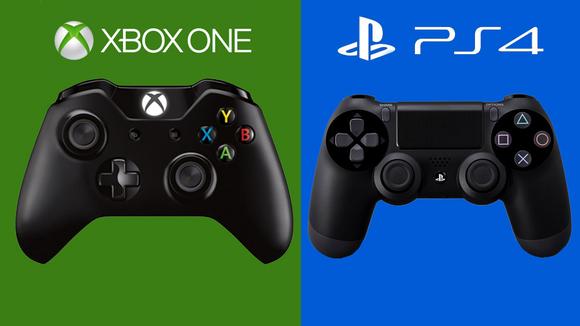
Ultimately, the reason why I keep viewing this topic with the Citizen Kane qualifier is that, for all intents and purposes, whether and how a creative work can be accessed matters in terms of keeping the medium moving forward.  Gamers have adapted to new controllers before, and will continue to adapt – even though it seems that the Xbox360 controller more or less set the standard as far as handheld controllers go (and as evidenced by the iterative similarities of the XBO and PS4 controllers).

The Wii and the Kinect were novel approaches to attracting a wider audience into gaming, but, sadly, they became novelties themselves because there was no truly great game that took full advantage of what those control systems had to offer.  It would appear that VR has much wider potential in terms of immersion, and one can create a wider variety of games for it – but it’s also going to be expensive, and silly-looking, and the whole nausea thing can’t be ignored.

In my opinion, touch screen controls might very well be the key towards making games easier to play for the non-gamer, since so many non-gamers are already using touch screens and have an intuitive grasp of how they work.  This is also why the Steam controller is so interesting to me, personally speaking – of all the new controller ideas, the Steam controller’s touch pads seem like they might be the most capable – and the most intuitive.

And so if the ultimate goal of controller design is to get more people involved, then it seems to me that they’ll respond easier to concepts they already understand.

NOTE: Because of WordPress weirdness, I can’t include the little widget that allows you to see other submissions for this BoRT topic.  But I encourage everyone to check out the BoRT page to see further submissions as they roll in.

Weekend Recap: tying up loose ends

I am currently playing The Waiting Game, a dispiriting “race against the clock”-type deal wherein I hope to receive my fixed-up Vita before April 17, my last day in the office before I leave for vacation.  As I have not yet received the box they sent me to mail the Vita back, it’s not looking good.  (I have not yet received my snazzy Vita travelling case, either, but since there’s no working Vita to put it in, I’m not sweating it.)

I finished 3 games over the weekend that merit discussion, though.  Let’s start at the top and work our way down.

1.  Monument Valley is an iOS puzzler – imagine Fez with level designs by M.C. Escher – currently available for $3.99.  It is an absolutely gorgeous game, filled with very clever puzzle design and accented with lovely sound effects.  It is also only 10 levels long and I beat it in under an hour.  Normally I’m not the type of person who gets up in arms when it comes to high prices for short play experiences – I was very happy to pay $20 for Gone Home – and I’m not necessarily up in arms here, but I would certainly understand your frustration if you laid out 4 bucks for a game that you could finish during your evening commute, especially since there’s not a tremendous amount of replay value once you’ve figured out the solutions.  That being said, the game’s creator, when asked in a Touch Arcade Twitch stream if new levels were coming, said: “Looks like we will. People seem to want more levels.”  I know I do.

2.  I did end up finishing Bioshock Infinite: Burial At Sea Ep. 2, though the last few combat sections were brutally difficult and annoying and I nearly rage-quit a few times.  Even though I’ve played all the games (well, all the Irrational ones at least – I can’t recall if I finished Bioshock 2, and I only played the first 5 minutes of Minerva’s Den), I’m not necessarily sure that I’m as knowledgeable about the lore and the supporting cast of characters as I suppose I should’ve been, in order to better appreciate the finer intricacies of Episode 2’s plot points.  The final reveal is interesting, to be sure, though I’m not sure it enhanced anything for me.  I’m glad I played it, I guess, but I just wish I didn’t hate the gameplay as much as I do.

3.  Also finished Infamous: Second Son.  I’m kinda still playing it, too – once I finished the story (and received the fourth of four powers), I then started going back and doing all the side stuff that I couldn’t be bothered with during the regular story.  (Also:  I didn’t realize the campaign was going to be as short as it was, so I ended up finishing the game long before I thought I would.)  It’s certainly the prettiest PS4 game I’ve seen, and it sets a very high graphical standard for open-world adventure games to follow; but it’s also an Infamous game, and I always seem to forget that Infamous games start out kinda fun and then become somewhat forgettable.  The good/bad karma thing is, as always, kinda dumb, and unfortunately the story just isn’t interesting enough to warrant a second playthrough to see how things would change.  This very well might be one of the easiest open-world games to get to 100% completion – there’s not a whole hell of a lot to do, side-mission wise, and all the “hidden” stuff is actually placed on your map once you clear out an enemy base.  I will probably continue tooling around and trying to get to 100%, if only because it really is that gorgeous to look at.

This coming week:  not really sure what it’s looking like, gaming-wise.  I’m kinda still playing through Strider and Rayman Legends on the PS4, and I may give some of the side-missions in MGS: Ground Zeroes a shot.  And depending on what happens with my Vita, I may or may not end up buying FTL for my iPad.


ups and downs

I’m fighting a horrific head cold, so bear with me as I try to remember what’s happened this week:

1.  The biggest news is that I’ve got some serious Vita problems.

In my previous post (Monday), I’d said (at the very end) that the memory card for my new Vita had finally arrived, but the Vita itself wouldn’t work on my office wi-fi, and so it was still useless.  So I finally got it set up Monday night, and then promptly downloaded all the stuff that I’d already had in my PSN library – Fez and Steamworld Dig, for starters, and then using my $10 credit to help pay for Final Fantasy X HD.  PS+ people also get Uncharted and Wipeout for free, so I started downloading those as well…

…and they literally didn’t finish downloading until Wednesday morning, before I left for work.  That should’ve been my first clue that something was off.

My second clue was that there was this weird vertical line running down the left-hand side of the screen – very faint, but sort-of looking like the red line on loose-leaf paper.  Which eventually faded away.

My third clue wasn’t even a clue.  Wednesday afternoon, during a slow moment at work, I pulled out my Vita and decided to give Uncharted a try.  I got around 30 seconds into it when the graphics started glitching out, and then the game suddenly froze up.  I powered the Vita down, waited a little bit, and then tried to restart – but the Vita wouldn’t restart.  Screen stayed black, no sound, and then the machine would turn off.  Contacted support – tried doing a forced restart into safe mode three times – still nothing.  So now I’m sending it off for repairs.  I am doubtful that I will get it back before my upcoming vacation, which is a little over 2 weeks from now.

On the bright side, Fez is still wonderful, and I’m really glad to have it in a portable version.

2.  I finished one playthrough of Metal Gear Solid: Ground Zeroes.  I am unsure if I will play through it again, although the release calendar is still a bit dry for the foreseeable future, and there’s certainly a hell of a lot more to do.

My feelings about the MGS franchise are well-known and not worth repeating here.  As for this particular game, well:  Ground Zeroes has some of the best moment-to-moment gameplay the series has ever seen, and it uses the open world remarkably well (even if that world is small – and probably it’s done well because it’s small), and I’ll admit that there’s a part of me that kinda does want to play through it again and see all the stuff I didn’t see the first time.  And maybe I’d also do all the side missions and all the other stuff that’s there, because based on my post-game stats it’s abundantly clear that I’ve barely scratched the surface.  (And so the common pre-release complaint about having to spend $40 for 1 hour’s worth of gameplay is clearly ludicrous, because there’s obviously a lot more here to do.)

But the game is also fucking ridiculous, and impossible to take seriously, and features some of the worst dialogue I’ve ever heard.  I don’t know why people are so up in arms over Kiefer Sutherland’s casting; he barely utters a word, and in any event the words he does utter might as well be gibberish.  I don’t know if it’s the translation that’s so terrible, or if it’s that the translation is slavishly faithful to what’s actually terrible in the original Japanese*, but ultimately the problem is simply that it’s dumb.

There’s a lot of discussion (that I’m too lazy/sick to link to) about how it’s often unfair to credit one person as the “Game Maker” when a big-budget AAA game is often the work of hundreds of people – but MGS has always been Hideo Kojima’s baby, and the number of times his name appears in the opening titles and closing credits** means that he’s OK with all this.  Even though he’s said numerous times that he’s tired of Metal Gear and longs to do something else, he’s continually given enormous resources to keep cranking these things out, and so he continues to stick with it.  And there’s a part of me that admires his willingness to out-crazy himself with each successive effort.  But this isn’t Saints Row, which at least has the benefit of being clever.

I am beginning to feel that Kojima is turning into George Lucas, surrounded by an army of minions who are terrified of saying “No, don’t do that.”

3.  I am becoming weary of Infamous: Second Son, even as it continues to graphically dazzle.  The Infamous games have always been fun but also somewhat shallow, and that is definitely the case here.

4.  I am hoping to finish Bioshock Infinite: Burial At Sea Ep. 2 by the weekend.  I continue to enjoy it in spots, and also deeply hate it in spots.  It is guilty of very lame and tired design cliches, such as the continued over-use of audio logs and the very, very tiring trope of wandering through a series of enemy-free rooms, finding the thing you’re looking for, and then – abracadbra, those enemy-free rooms are suddenly conveniently swarming with bad guys.  It is also still consistent with the original game, in that these beautiful paradises are completely devoid of normal human beings.  With a few notable exceptions, everyone you meet in the game (in person, at least) is an enemy.  It makes these fantastical worlds feel hollow.

5.  Anyone in NYC who has even the slightest interest in pinball should stop what they’re doing and head over to Modern Pinball NYC, over on 3rd Avenue between 26th and 27th streets.  I was there last night for the prelude to a NYVCC meeting, and it was love at first sight.  I’m a huge pinball fan but I’m also a homebody, and so most of my pinball time these days is spent either in Pinball FX2 on the 360 or in Pinball Arcade and Zen Pinball on my iPad.  And while those digital editions are fun in their own right, nothing beats the real thing.  Great selection of tables, both old and new, and they’re constantly being maintained – which is a treat in and of itself, getting to see the belly of a pinball table, which is insane.  Highly recommended.  I may end up throwing my birthday party there later this year.

10007245_10152266988925865_1208936234_n

__________

* This is the same problem I had with Murakami’s “1Q84”.  I’ve loved all of the English versions of his previous work, but I found the writing in 1Q84 to be pedestrian and sophomoric and completely devoid of his usual poetic voice.

** SPOILER ALERT – I am also aware that in one of the bonus side missions, Kojima himself is an actual character in the game.  So, yeah.

weekend recap: notes and errata

This weekend we celebrated my son’s 1st birthday, and as such there was not a tremendous amount of time for gaming – so I’m still in a holding pattern as far as Infamous Second Son and MGS Ground Zeroes are concerned. Still, there’s a couple things that I wanted to talk about, so here we go:

1.  In my haste to get that Tokyo Police Club post out the door, I completely forgot to include what is arguably the most important point I was trying to make:

In this current social and economic climate, where trying to make a living as a professional musician is arguably as difficult as it’s ever been because nobody buys records anymore and revenue from streaming services like Spotify is laughable at best, and for a band that’s trying as hard as it possibly can to prove to both its old fans and its potential new ones that it didn’t hit its creative peak 8 years ago, it takes an astounding set of brass balls to have the first (and best) song on your new album be nearly 9 minutes long.  And because the song is so good precisely because of how well-constructed it is, and because editing it for the purposes of making it a single kinda defeats the song’s whole purpose, it seems improbable that it’ll see any significant radio/airplay.  (It is fortunate – and probably much appreciated by the record label – that the 2nd song (“Hot Tonight“) is also quite catchy and hummable and ear-wormy.)  But still:  I remain impressed that they did what they did.  Bands don’t often get a chance to make more than 3 albums these days before either getting dropped from the label or just imploding naturally.  If this album tanks, it may very well be the end of TPC – I suspect there’ll be a solo album or two from the singer, but you can only hang on to your dream for so long before the bills start to pile up.

2.  I did manage to squeeze in a little bit of Bioshock Infinite: Burial At Sea Pt. 2.  I’m not quite sure how far I am into it, and so I’m reluctant to discuss it in great detail.  But there are certainly things about it that merit discussion.

My relationship with the Bioshock franchise is in a difficult place, to be honest.  I’m still in love with the technical side of the game – the graphics and audio remain superlative, and it’s very difficult to play the game without wanting to take screenshots at every single moment.  It is more that my appreciation for the games’ narrative ambitions – even if they’re not entirely coherent – are directly at odds with their gameplay, which I’ve always found problematic.  As it happens, I fell in love with BAS2 pretty much immediately, and remained enthralled with it… right up until I picked up my first weapon, and then my heart sank a bit.

That this episode switches the emphasis from shooting to stealth is a very smart move, and in retrospect it feels incredibly obvious, and I’m certainly not the first to make the observation that it’s entirely possible that the entire franchise might’ve benefited greatly from being a stealth-focused shooter right from the get-go.  It’s just that…. well… considering how much intelligence went into crafting every other element of these games, making the game combat-focused above all else feels like an easy reach towards the lowest common denominator of audience.  I’ve felt this way ever since the first game, and even though the stealth approach feels a lot more natural, I still kinda hate it.

Still – I won’t fully speak my peace until I’m finished with the episode.

3.  Last week was a bit of an emotional downer, as far as things go, and so in my melancholic state I went and did a silly thing and ordered a PS Vita.  I also ordered a protective case and a 32gb memory card.  The problem is that while the Vita and case arrived on Thursday (as promised), the card is still nowhere to be found – it should’ve arrived on Friday, and I’m hoping that it didn’t get lost entirely.  And because the memory card is not here, the Vita itself is completely useless – I can’t even turn it on and get it set up without it.  (And because the Vita only works with these specifically branded memory cards, I can’t just run out to Staples and buy a non-Sony one.)  I know this is old news, but it’s infuriating that the Vita is set in such a stupid manner.

UPDATE:  the card literally just arrived as I typed that last sentence.  Woo-hoo!

UPDATE 2:  the Vita won’t work on my office wi-fi, so I can’t actually do anything just yet.  Boo-hoo!

on Tokyo Police Club, regret, nostalgia, etc.

I need to switch gears here for a moment, if you’ll indulge me.

Notwithstanding my day job, which has nothing to do with anything:  in my other life I’m a musician, though I haven’t been doing a whole hell of a lot of that these days.  I’m way closer to 40 than I care to admit, I’m tired, I have a baby, I live in an apartment with very thin walls, etc.  I still write and record every once in a while, but I’m certainly not doing it with the gusto that I once did.

Indeed, my relationship with music – not just how I write it, but how I listen to it and consume it – has evolved considerably over the years.  I didn’t know that then, necessarily, but I can certainly see it now.  My parents were classical musicians, so I grew up mostly listening to classical music and whatever current pop music I felt they’d permit.  (It’s no wonder that Paul was my favorite Beatle; out of all of them, he was the most classically melodic.)  When I was 11 and started going a sleepaway performing arts camp, I was introduced to classic rock and – specifically – prog rock; a few years later, my stepbrother introduced me to what was then known as “college music”, or what would soon be seen on 120 Minutes

I could continue retracing my history of musical influences, but the ultimate point I’m arriving at is that I no longer care where the music I like comes from, and that I no longer care if the music I like is considered “cool.”  I haven’t been cool for quite some time now, and I’m no longer interested in impressing anyone with my eclectic musical taste, because nobody cares.  And frankly, I’m not nearly as fluent in what’s currently happening as I would be if I did still care.  Pitchfork used to be the be-all, end-all in terms of what to listen to, but I find that I really don’t care for most of the stuff they give great scores to, and I also find that they tend to give middling scores to the stuff I genuinely love (like this 6.6 for one of my all-time favorite albums).

I’m bringing this up because yesterday was a pretty rough day for me, emotionally at any rate, and on my way home from work I found myself listening to the absolutely epic first song “Argentina (Parts I, II and III)” on the new Tokyo Police Club album over and over and over again, and it was glorious and beautiful and heartbreaking and uplifting all at once.

Tokyo Police Club is a band that I’ve had a particular fondness for, for quite some time now.  I can’t quite recall where I’d first heard them, but in any event I eventually heard “Nature of the Experiment” off of their first album and it absolutely slayed me.  It was young and dance-y, to be sure, but there was also something very subtly melancholic about it; those open guitar lines in the verses feel wistful to me, and yet by the time the coda arrives the energy of the song is positively euphoric.  Notice, also, that there’s absolutely no wasted space – it’s a 2-minute song that leaves just as quickly as it arrives, with every second meaning something.

The new album “Forcefield” is a long time coming; their previous album “Champ” came out 4 years ago, which was somewhat underwhelming when compared to the great “Elephant Shell” in ’08 – which itself was somewhat underwhelming when compared to 06’s “A Lesson in Crime” and 07’s “Smith” EP.  Upon first listen, this new album feels very slick and produced, and very precisely calibrated and engineered to deliver the goods.  The second song, “Hot Tonight”, sounds like it’s designed to be a classic Summer Jam – it’s a shame, then, that the album was released on a very cold day in March.

The charm in a song like “Nature of the Experiment” – to me, at any rate – is that it feels raw and sincere, and also sounds like it was recorded live, in one or two takes.  This new album – while still very listenable and enjoyable – sounds a bit more manufactured.

AND YET.

“Argentina” is an absolute knock-out, and might be my favorite thing they’ve ever recorded.  It’s nearly 9 minutes long and there’s still not one second wasted, every note feeling vital and necessary.  And while I’m not necessarily enthused about how slick the rest of the album sounds, I adore the production aesthetic here.

And even though I’m not necessarily a lyrics-first listener, there’s something about certain lines in this song that hit me square in the face.  I am suddenly reminded of myself at a much younger age, feeling unsure of myself (“How many kinds of people do you think there really are for me?“); people I haven’t thought of in years, of people I might have wronged and that I wish I’d treated better (“‘Cause if I’d had known that you were only in for the weekend / ’cause if I had only known what you were thinking I would’ve been so so so so much nicer“), of people whose smiles I haven’t seen in far too long (“and when you smile with all your teeth / yeah, I’m done“), of doomed crushes and unrequited love (“I don’t want to want you like I want you“)…

These guys are far too young to make me feel this goddamned old and wistful and regretful and everything else.  And yet I’m eternally grateful that I’m not yet cynical enough to stop getting affected by a truly great pop song.

Below is a Spotify playlist entitled “Many Feels Per Minute”, which is specifically made up of songs in major keys and fast tempos that also make me feel pleasantly wistful.  That’s a tricky thing to pull off, and maybe this list is too long for its own good.  But in any event, I got punched in the face by a song yesterday, and now I’m sharing it with you.